When the grid fails, the city still owns the road-safety problem. A dark corridor, an offline controller or a missing lighting asset must be detected, managed and documented.
For municipal owners facing recurring outages, weak distribution feeders, delayed grid extension or diesel dependence, street lighting is a continuity system before it is a lamp purchase. STSYSTEMPLC combines grid input, solar charging, battery-supported operation, CAT 1 monitoring, optional GPS tracking and local control records so critical roads can follow an approved operating plan when utility power is unstable.
Road users need safe, predictable lighting when the grid is unavailable. City owners need a system they can specify, verify, operate and defend after handover. Before comparing wattage or battery size, quantify which roads go dark, how long outages last, where diesel is used and which routes must remain lit.
Define the minimum lighting service required on junctions, pedestrian areas, port roads, industrial routes and other priority sections during an outage.
Define outage duration, priority roads, local operating rules, maintenance response and the records the owner must retain.
Require calculated autonomy, communication coverage, alarm logic, FAT/SAT tests, asset lists, account access and exportable handover records.
CAT 1 alarms and optional GPS data should lead to a named response team, a maintenance ticket and a documented closure action.
Recommended direction: for a city that cannot rely on continuous utility power, first define the required lighting service during outages. Then specify Hybrid Solar-Grid power, CAT 1 online monitoring, optional GPS tracking, local autonomous rules, alarm records and owner-held maintenance exports as one system boundary.
User logic: people do not buy a power architecture; they experience whether a junction, pedestrian crossing, public transport stop or industrial access road remains safely visible when electricity fails.
Owner procurement logic: purchase a measurable service level. State the outage scenario, priority-road lighting level and duration, alarm and response workflow, selected tracking scope, acceptance test, record ownership and maintenance responsibility before comparing suppliers.
A pure solar street light may reduce cabling, but it can become a silent asset if it is stolen or disconnected. A pure grid street light may be familiar, but it loses resilience when outages are frequent. A diesel generator can provide backup, but it adds fuel cost, noise, service visits and theft exposure. Hybrid Solar-Grid with monitoring changes the question from "which lamp is cheaper" to "which system remains visible, traceable and maintainable after installation."
| User / Owner Need | Procurement Risk | Evidence Before Award | STSYSTEMPLC Hybrid Solar-Grid Response |
|---|---|---|---|
| Road users need priority sections to remain safely lit during grid instability. | Outage periods create dark road sections and public complaints. | Outage scenario, battery duration, local rule and recovery test. | Grid supply, solar charging, battery support and CH-800 / field-control rules can be configured for local operating continuity. |
| The owner needs to know when a monitored asset goes offline, is opened or is moved. | A missing luminaire may not be discovered until a field patrol or public complaint. | Asset identity, offline/tamper alarm logic and optional GPS movement record. | CAT 1 monitoring and optional GPS tracking help report abnormal asset status and support moved-asset investigation. |
| The operations team needs lighting rules to continue when mobile communication is weak or unavailable. | Remote, island, mountain and industrial routes may have uneven signal quality. | Communication survey, reporting interval, offline record boundary and fallback rules. | CAT 1 is suitable for direct cloud communication where available, while local operation continues according to approved field rules. |
| The finance and maintenance teams need to reduce routine diesel cost and service visits. | Fuel logistics, generator maintenance and noise add long-term operating pressure. | Fuel cost comparison, outage profile and lighting priority schedule. | Hybrid Solar-Grid reduces the need to treat diesel backup as the normal public-lighting operating model. |
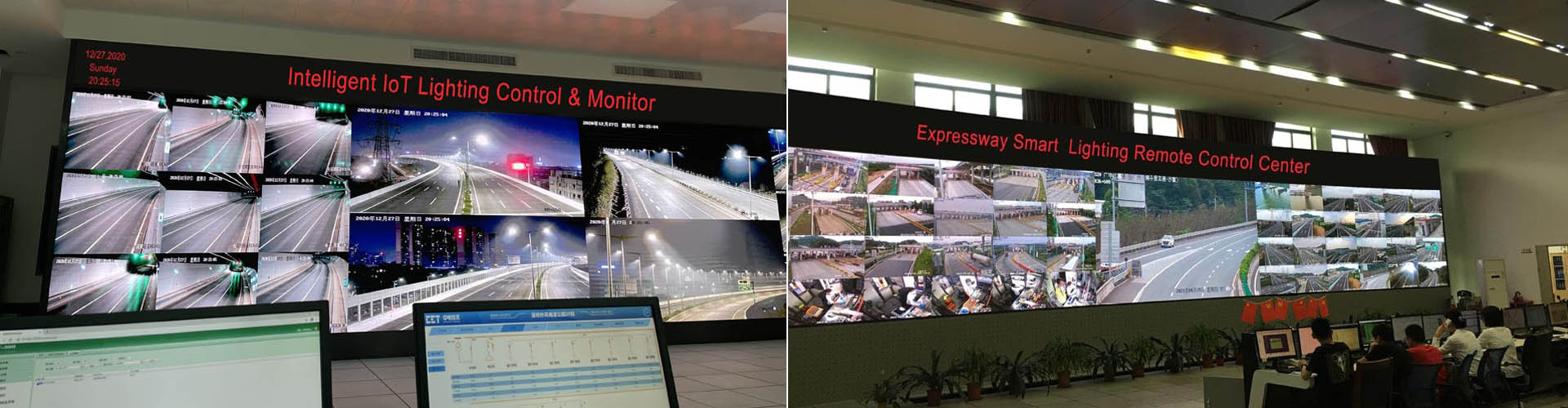
Before an owner accepts a power-continuity or monitoring claim, the supplier should demonstrate experience with real field-control pressure. The 93KM Shenzhen Outer Ring Expressway reference connects large-scale lighting control, communication reliability, maintenance visibility and project-level acceptance.
Engineering Evidence: 93KM Shenzhen Outer Ring Expressway Lighting Control. Review the project-scale control, communication and maintenance context before evaluating the Hybrid Solar-Grid switching demonstrations below.
Evidence boundary: this historical project video demonstrates engineering capability and operating context. It does not replace the current project's approved topology, energy calculations, configured limits, FAT/SAT results, commissioning records or signed acceptance package.
In many tropical, island and fast-growing urban regions, road lighting assets are installed across long corridors, port approaches, industrial zones, mining roads, new town extensions and peri-urban highways. The owner may not have a dense patrol network. If a luminaire, battery, solar panel or control box is removed, the failure is not only physical loss. It also creates a safety gap, a maintenance dispute and an unclear responsibility chain.
The owner may learn about theft only after a dark road complaint, manual inspection or accident report. The asset record may show "installed" while the field location is already empty.
The controller can report abnormal status, power interruption, communication loss or other configured events so the owner has an earlier warning signal.
Moved-asset location records can support investigation, dispatch and evidence review when the project requires traceability beyond a simple offline alarm.
Procurement point: alarm and tracking requirements should be written into the system scope. The owner should know what is detected, what is reported, how long the controller can remain online under battery support, who receives alarms and which records are exported at handover.
This is an owner-screening map, not a claim that every district in each city has the same grid condition. The named cities create practical search and procurement entry points; each project must verify feeder reliability, outage duration, grid-extension timing, diesel runtime, mobile coverage and priority-road lighting requirements before design.
For city owners in island and tropical markets, the purchase starts with an outage map: weak feeders, rainy-season interruptions, grid-extension gaps, port and industrial loads, remote roads and diesel-supported sites. The city names below identify procurement markets, not uniform citywide grid conditions.
| Country / Region | Capital + Commercial / Industrial City | Owner Power Problem to Verify | Procurement Response |
|---|---|---|---|
| Papua New Guinea | Port Moresby, Lae | Verify feeder coverage, daily outage hours, diesel runtime and repair travel time on port, mining and peri-urban roads. | CAT 1 online alarms and optional GPS help manage asset movement, weak-grid exposure and long dispatch distances. |
| Indonesia | Jakarta, Surabaya | Verify reliability by island and district; outer-city, port and resource roads may not match central-grid performance. | Hybrid power reduces single-source risk while tracking records support city-wide asset management. |
| Philippines | Manila, Cebu | Verify storm outage duration, restoration priority, weak island feeders and lighting required before utility recovery. | Battery-supported monitoring can keep abnormal alarms visible when lighting assets are exposed to outages or removal. |
| Vietnam | Hanoi, Ho Chi Minh City | Verify grid-extension timing, feeder loading and outage behavior on new industrial, port and coastal roads. | Asset identity, cabinet records and monitored lighting zones support handover for large municipal networks. |
| Thailand | Bangkok, Rayong | Verify backup needs on island access, industrial corridors and road sections where public lighting cannot wait for feeder restoration. | Hybrid Solar-Grid with monitoring helps protect high-visibility public roads and tourism access routes. |
| Malaysia | Kuala Lumpur, Kota Kinabalu | Verify remote feeder length, storm exposure and service response for East Malaysia, island and port-road projects. | Online asset records help owners compare energy, alarms and maintenance across separated operating zones. |
| Myanmar | Naypyidaw, Yangon | Verify scheduled and unscheduled outage hours, generator use and the minimum local lighting schedule for each route. | Local autonomous operation and online alarms reduce dependence on continuous central communication. |
| Cambodia | Phnom Penh, Sihanoukville | Verify whether new roads are energized on time, how often feeders fail and which junctions require battery-supported lighting. | CAT 1 monitoring supports owner visibility where field maintenance resources are limited. |
| India | New Delhi, Mumbai | Verify feeder-specific outages, voltage variation, distribution capacity and the city's priority-road service requirement. | Hybrid power and traceable controllers help separate energy performance from asset maintenance disputes. |
| Bangladesh | Dhaka, Chattogram | Verify load-shedding exposure, monsoon restoration time, feeder congestion and backup duration for dense road networks. | Alarm records and local fallback improve reviewability after handover. |
Middle East procurement should distinguish a stable city center from the actual project route. Desert extensions, reconstruction roads, ports, border corridors and new industrial zones may face long feeders, delayed utility connection or generator dependence even when the national grid is strong.
| Country / Region | Capital + Commercial / Industrial City | Owner Power Problem to Verify | Procurement Response |
|---|---|---|---|
| Saudi Arabia | Riyadh, Jeddah | Verify grid-connection timing and feeder distance for desert extensions, new developments and remote municipal routes. | Hybrid power, monitored cabinets and optional GPS support asset control over long-distance routes. |
| United Arab Emirates | Abu Dhabi, Dubai | Verify whether the specific port, island, industrial or expansion route needs continuity during utility maintenance or emergency isolation. | Owner-held records and monitored lighting zones help meet high handover expectations. |
| Oman | Muscat, Duqm | Verify long-feeder reliability, delayed grid connection and generator dependence on port, logistics and intercity roads. | CAT 1 alarms and local operation reduce service uncertainty on separated road assets. |
| Iraq | Baghdad, Basra | Verify outage hours, generator runtime, feeder damage risk and the lighting schedule required for reconstruction and oil corridors. | Battery-supported monitoring and GPS options help keep asset status visible when field conditions are complex. |
| Jordan | Amman, Aqaba | Verify feeder capacity, utility interruption history and the cost of extending stable power to port and peripheral roads. | Energy, alarm and maintenance evidence help owners evaluate lifecycle results. |
| Yemen | Sana'a, Aden | Verify available grid hours, fuel access, battery charging opportunity and the minimum safe lighting level for recovery routes. | Hybrid Solar-Grid with local operation can reduce dependence on continuous grid and generator availability. |
For African city owners, the procurement case often begins with load shedding, limited feeder capacity, unserved road extensions, long repair distances or diesel-supported public assets. The tender should convert those conditions into a required lighting duration, priority-road schedule and acceptance test.
| Country / Region | Capital + Commercial / Industrial City | Owner Power Problem to Verify | Procurement Response |
|---|---|---|---|
| Nigeria | Abuja, Lagos | Verify grid availability, generator runtime, feeder failure frequency and priority-road lighting during utility outages. | Offline/tamper alarms, optional GPS and hybrid power support continuity and asset accountability for large public lighting investments. |
| Ghana | Accra, Tema | Verify feeder reach, outage duration and diesel use on port, industrial, mining-logistics and expanding municipal roads. | CAT 1 records support city owners that need energy and asset evidence after handover. |
| Kenya | Nairobi, Mombasa | Verify reliability outside central business districts, grid-extension timing and restoration time on county and port roads. | Hybrid Solar-Grid helps reduce generator dependence while tracking records support maintenance dispatch. |
| Tanzania | Dodoma, Dar es Salaam | Verify unserved extensions, voltage and outage conditions, repair distance and the required lighting duration per night. | Local lighting autonomy and online alarms improve visibility across separated routes. |
| Ethiopia | Addis Ababa, Dire Dawa | Verify supply interruptions, new-connection timing and whether critical industrial and logistics roads need local autonomy. | Asset identity and monitored zones help separate electrical faults from field-service responsibility. |
| Angola | Luanda, Lobito | Verify utility availability, generator dependence and restoration time on oil, port and rapidly expanding urban corridors. | Hybrid power and GPS options help protect assets where road sections are far from maintenance bases. |
| South Africa | Pretoria, Johannesburg | Verify load-shedding stages, outage windows, feeder exemptions and the city's required lighting service during grid events. | Hybrid Solar-Grid helps owners plan lighting continuity where grid events and maintenance pressure matter. |
For Latin American, Caribbean and island-territory owners, the relevant conditions include storm outages, remote feeders, mining and port corridors, informal grid extensions, high restoration cost and diesel-backed public facilities. Procurement should start with the route's measured outage and recovery profile.
| Country / Region | Capital + Commercial / Industrial City | Owner Power Problem to Verify | Procurement Response |
|---|---|---|---|
| Brazil | Brasilia, Manaus | Verify remote feeder coverage, storm and vegetation outage history, restoration time and diesel-supported road assets. | Hybrid power, monitoring and optional GPS help owners manage separated assets at city scale. |
| Peru | Lima, Arequipa | Verify grid-extension cost, long-feeder reliability and generator use on mining, port and peripheral highway sections. | Local operation and alarm records reduce the risk of invisible failures on remote routes. |
| Colombia | Bogota, Medellin | Verify terrain-related restoration time, feeder stability and critical-road lighting needs in port and peripheral districts. | Asset identity, cabinet records and GPS options help connect field events with maintenance action. |
| Mexico | Mexico City, Monterrey | Verify local utility reliability, grid-connection timing and outage response for industrial, border and tourism routes. | Hybrid Solar-Grid can support continuity and monitored ownership for distributed public assets. |
| Ecuador | Quito, Guayaquil | Verify scheduled outage exposure, restoration time and priority lighting for port, mountain and municipal routes. | CAT 1 alarm records help owners manage outages, moved assets and maintenance closure. |
| Dominican Republic | Santo Domingo, Santiago | Verify hurricane outage duration, feeder restoration priority, fuel logistics and essential tourism-road lighting. | Hybrid Solar-Grid reduces dependence on a single power source while GPS supports asset traceability. |
| US island territories and coastal island projects | San Juan, Hagatna | Verify storm isolation, restoration lead time, fuel cost and the required autonomous lighting period for island roads. | Hybrid Solar-Grid with remote monitoring can support emergency-lighting continuity and asset accountability. |
Diesel generators are familiar to many contractors, but they should not be treated as the default long-term street-lighting answer. Fuel delivery, theft, noise, maintenance visits and operating cost can become larger than the original lighting equipment discussion. The correct comparison is not generator versus lamp. It is operating responsibility over several years.
| Power / Control Model | Strength | Risk or Limitation | Best Use | STSYSTEMPLC Procurement View |
|---|---|---|---|---|
| Diesel generator backup | Fast backup power, familiar supply chain and simple emergency logic. | Fuel logistics, noise, maintenance, fuel theft, generator theft, carbon emissions and repeated site visits. | Temporary works, emergency recovery, construction sites and short-duration backup. | Useful as a temporary layer, but not ideal as the normal operating model for distributed public road lighting. |
| Pure solar street light | No grid cable requirement and faster deployment for isolated roads. | Battery oversizing, rainy-season risk, panel and battery theft risk, limited online visibility if no controller is specified. | Small rural roads, low-risk locations and routes with predictable sunlight and maintenance access. | Consider only after confirming autonomy days, theft risk, battery replacement plan and monitoring requirements. |
| Pure grid street light | Lower system complexity where the utility grid is stable and available. | Outage vulnerability, limited resilience, no backup lighting and no asset tracking unless extra systems are added. | Stable urban grids and low-theft-risk municipal networks. | May be insufficient where the owner requires outage continuity, remote visibility or asset tracking. |
| STSYSTEMPLC Hybrid Solar-Grid + CAT 1 + optional GPS | Grid supply, solar charging, battery-supported operation, online alarms, local rules, asset identity and optional tracking. | Requires proper system planning, communication survey, battery specification and commissioning tests. | Government roads, tropical cities, island countries, port roads, mining corridors, industrial zones and weak-grid public lighting. | Recommended for owners who need lighting continuity, anti-theft response, GPS traceability and records that remain reviewable after handover. |
The anti-theft value comes from a complete chain. A controller must know the asset identity, report abnormal events, use a suitable communication path, keep selected status data available and support the owner with records. GPS is optional, but when theft risk is high, it changes the conversation from "the lamp is missing" to "the asset movement can be investigated."
| Layer | Function | Acceptance Check | Owner Benefit |
|---|---|---|---|
| Hybrid power layer | Grid supply, solar charging and battery-supported operation. | Outage test, charging test, operating mode and recovery behavior. | Lighting is not tied to one power source under unstable conditions. |
| CAT 1 communication | Direct online connection through mobile network where coverage is available. | Signal survey, reporting interval, weak-signal behavior and offline record boundary. | Owner receives status and alarms without waiting for manual inspection. |
| Optional GPS module | Provides location information for selected moved-asset tracking where specified and where the module remains powered and connected. | Position accuracy expectation, reporting condition, battery duration and platform display. | Supports investigation and evidence for stolen or relocated street light assets. |
| CH-800 / platform records | Organizes zones, alarms, energy records, asset identity and maintenance closure. | Export file, alarm history, user access and handover backup. | Evidence remains available after contractor changes. |
Anti-theft and GPS tracking should not be left as a marketing sentence. The tender should define when the controller sends alarms, what counts as abnormal movement, how long monitoring can continue under backup power, which users receive notifications and which records belong to the owner.
Define offline, movement, battery, cabinet, controller and abnormal power events separately. Each event should have a clear response path.
Identify the selected high-risk luminaires, battery boxes, control cabinets or special road sections that require GPS, then define reporting and backup-power conditions.
Require asset lists, zone maps, alarm exports, maintenance closure records, configuration backups and owner account access at handover.
Define grid input, solar charging, battery duration, weather assumptions, local fallback and recovery behavior after grid return.
Review CAT 1 coverage, SIM management, weak-signal behavior, reporting intervals and what happens when the network is unavailable.
Clarify who responds to alarms, who replaces stolen equipment, who manages SIM cards and who owns exported system records.
STSYSTEMPLC is not only a lamp supplier for this type of project. The value is in organizing the field-control chain, communication method, local operating rules, alarm records and owner handover package around real public-road conditions.
Grid, solar and battery operation can be reviewed as a coordinated model instead of separate equipment claims.
The controller can communicate directly with the cloud platform where mobile network conditions support the design.
For high-theft-risk roads, optional GPS location data supports moved-asset investigation and asset accountability.
Approved lighting rules can continue locally when external communication is interrupted, subject to configuration and testing.
Alarm, energy, asset, cabinet and maintenance records support technical review after installation.
Large infrastructure experience helps owners review risk, handover, commissioning and long-term service responsibility.
| Checklist Item | Why It Matters | Evidence to Request | STSYSTEMPLC Proposal Output |
|---|---|---|---|
| Road and city classification | Capital avenue, port road, mining route and rural highway do not have the same operating risk. | Route map, pole plan, grid access, theft history and maintenance base distance. | Zone-based proposal with power, control, communication and monitoring boundaries. |
| Backup-power purpose | Lighting backup and communication backup may require different durations. | Outage scenarios, battery duration and alarm reporting requirement. | Hybrid Solar-Grid design with clearly stated operating assumptions. |
| Anti-theft response | Alarm without dispatch logic can still leave a dark road for days. | Alarm recipient, escalation flow, asset ID and maintenance closure record. | CAT 1 alarm record and optional GPS traceability for high-risk assets. |
| Diesel comparison | Generator purchase cost hides fuel, service and logistics pressure. | Fuel cost, maintenance visits, noise limits, site access and emissions policy. | Lifecycle comparison showing how hybrid operation can reduce generator dependence. |
| Owner handover | The system must remain usable after the installer leaves. | Accounts, exports, maps, backups, training records and acceptance files. | Owner-held evidence package for operation and future service review. |
These two demonstrations turn a written backup claim into visible procurement evidence. Buyers can review the workshop switching response first, then compare it with server-side status and field operation.
Workshop Demo: Hybrid Solar-Grid Street Lighting Testing
Grid interruption is simulated manually. Solar / battery-assisted power supports the lighting output, controller indicators show the working state, and the transfer response is visible before outdoor deployment.
Server Demo: Grid Power Off, Battery Lighting On
The server-side view and lighting operation are shown together. Procurement teams can review the grid-disconnection event, source status and continued lighting instead of relying on a written resilience statement.
Demonstration boundary: these videos show workshop and server operating evidence. Final approval still requires project-specific calculations, approved topology, configured transfer limits, witnessed FAT/SAT tests, commissioning and signed handover records.
For public lighting owners, confidence comes from delivered infrastructure experience, not from dashboard screenshots alone. The supplier should show how field devices, gateways, communication, local rules, alarm records and handover files are managed on large projects.
| Evidence Type | What the Owner Should Ask | Why It Matters | STSYSTEMPLC Evidence Direction |
|---|---|---|---|
| Large infrastructure references | Which projects prove field-control and system-integration experience? | Weak-grid and smart-road projects need operational discipline, not only product supply. | Reference major infrastructure experience such as Hong Kong-Zhuhai-Macao Bridge, Shenzhen Outer Ring and Shenzhen-Zhongshan Link project evidence where applicable. |
| Control architecture | How are controllers, gateways, cabinets and platform records organized? | Owners need clear responsibility after handover. | Provide zone logic, asset mapping, controller identity and alarm record structure. |
| Communication selection | Why CAT 1, PLC, LoRa or hybrid communication for this route? | Different road environments need different communication assumptions. | Use CAT 1 for direct online monitoring where suitable, and define other communication layers where required. |
| Acceptance testing | How will theft alarm, GPS record, power outage and communication recovery be tested? | Claims must become testable project records. | Offer FAT/SAT style acceptance scripts for power, alarm, communication and handover records. |
GPS should be assigned only after the owner defines the asset at risk and the required response. Typical scopes may include selected high-risk luminaires, battery boxes, control cabinets or special road sections. The exact hardware location, reporting condition and backup duration must be confirmed in the project design.
CAT 1 is useful where mobile network coverage is available. The project should include signal checks, reporting rules and a defined offline behavior for weak-signal sections.
It can reduce dependence on diesel backup for many street-lighting routes. Some projects may still keep generators for emergency or construction use, but not as the normal lighting model.
The system can be configured to report abnormal status. Where optional GPS hardware remains powered and connected, location data may support moved-asset investigation. The exact alarm, reporting and offline behavior must be defined and tested.
Asset list, pole map, controller ID, cabinet record, alarm history, configuration backup, user account, training record and maintenance workflow should be available to the owner.
Island projects often face higher logistics cost, storm exposure, separated maintenance bases and longer restoration times. Monitoring and optional tracking can reduce the time that an outage or asset loss remains invisible.
Continue from the owner requirement to the system category and the product route that best matches the verified outage profile.
Share the country, city, road type, grid condition, theft risk, mobile signal condition, required monitoring duration, GPS requirement, pole spacing, lighting wattage range and maintenance workflow. STSYSTEMPLC can organize the Hybrid Solar-Grid architecture, CAT 1 monitoring boundary, optional GPS tracking logic and owner handover evidence for technical review.

Adresse : F4,Bldg A, Hanzhong Industrial Park, No.67, North of Xinsha Ave, Xin Tang, Zeng Cheng, Guang Zhou, China
Tel : +86 20 8278 0427
Email : info@stsystemplc.com
Email : morrison426@163.com